
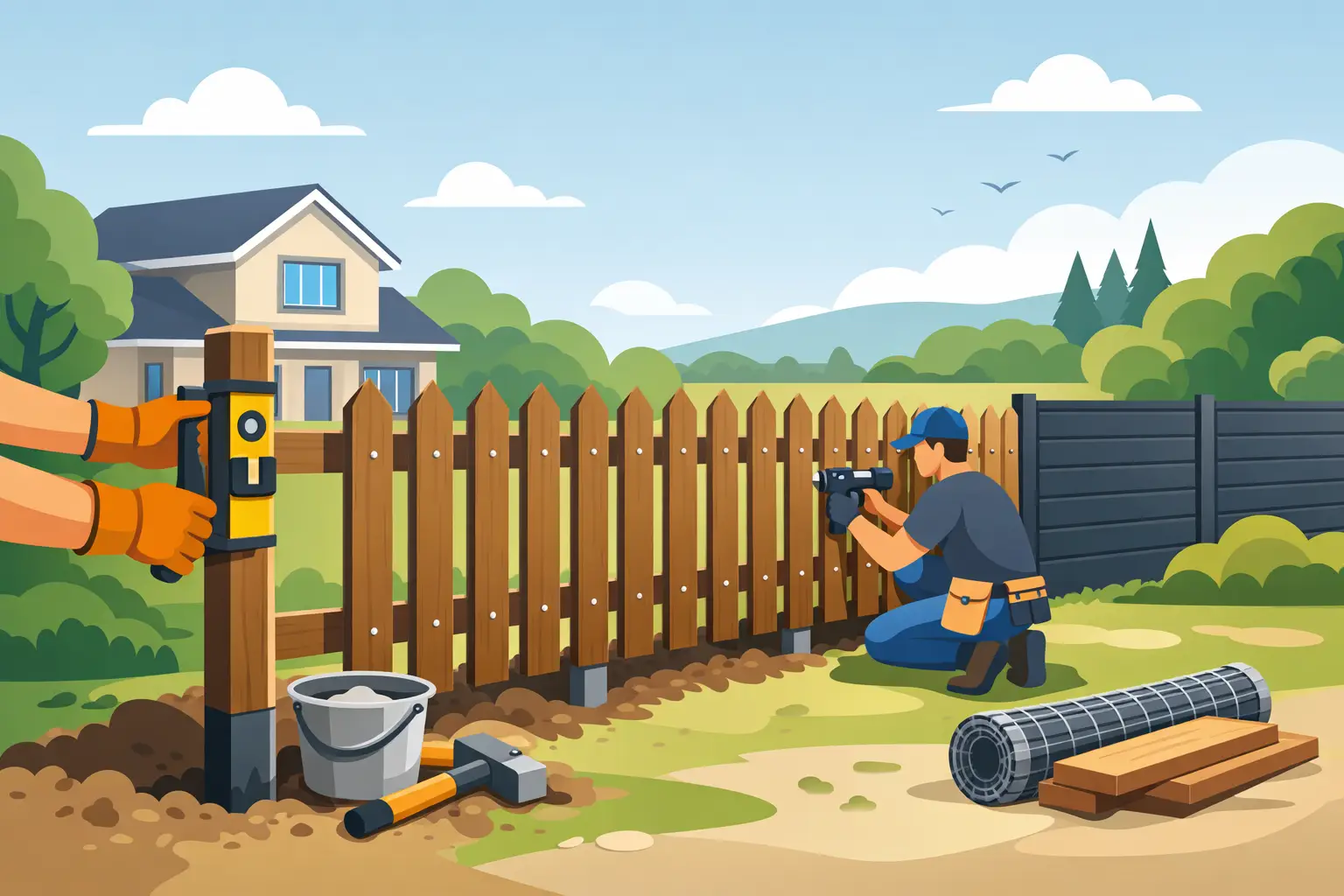

Fence Installation for a Stronger, Better Property
A fence can solve a real property problem in a single project: a backyard that feels exposed, a commercial yard with unclear boundaries, a pet area that is difficult to manage, or a frontage that needs a cleaner, more finished appearance. But fence installation is not simply a matter of setting posts and fastening panels. The details below grade, the property-line planning, and the material selection determine whether the finished fence stays straight, drains properly, and performs for years.
For homeowners and business owners, the right fence should do more than divide space. It should support the way the property is used, complement the building, and stand up to local weather without becoming a recurring repair issue.
Start Fence Installation With the Purpose
The strongest projects begin with a clear answer to one question: what must this fence do? Privacy, security, containment, appearance, wind protection, and access can each call for a different design. Trying to achieve every goal with the same standard panel often leads to a fence that looks acceptable on day one but does not serve the property well.
A privacy fence around a family yard may require six-foot solid panels, carefully planned gates, and attention to sightlines from neighboring homes. A commercial property may need a more open chain-link or ornamental metal system that defines a perimeter while maintaining visibility. For a restaurant patio, material selection and finish may matter as much as enclosure, because the fence becomes part of the customer experience.
Height, transparency, gate location, and footing depth should all follow the intended use. A tall solid fence offers privacy, but it also catches more wind. An open design reduces wind load, though it may provide less screening. This is where a site-specific plan matters more than a one-size-fits-all approach.
Confirm Boundaries Before Building
One of the most expensive fence mistakes is building on an assumed property line. Existing fences, landscaping edges, and a neighbor’s opinion are not reliable boundary evidence. Before construction begins, review the available site information and confirm the actual limits of the property where necessary.
This step is especially important when a fence runs close to a driveway, retaining wall, utility area, commercial access route, or shared side yard. A misplaced fence can create conflict, require removal, and delay the rest of an exterior improvement project. If there is uncertainty, a professional survey or boundary confirmation is a practical investment.
Local rules also affect design. Municipal requirements may govern fence height, front-yard placement, corner visibility, pool enclosures, gates, and setbacks from public space. Commercial sites can have added considerations involving emergency access, service routes, and site operations. A contractor who plans the work properly will identify these issues before materials are ordered, not after posts are installed.
Choose Materials Based on Performance, Not Just Price
Material cost is visible on a quote. Long-term maintenance, replacement needs, and structural performance are often less obvious, but they have just as much effect on the value of the project.
Wood Fencing
Wood remains a popular choice because it is versatile, warm in appearance, and easy to customize. It works well for privacy screens, traditional backyard fences, and designs that need to coordinate with decks, pergolas, or landscaping. Cedar is valued for its appearance and natural resistance to decay, while pressure-treated lumber can be a practical structural choice.
The trade-off is maintenance. Wood can shrink, expand, weather, and discolor over time. Proper post installation, drainage, staining or sealing, and occasional repairs help protect the investment. Wood is an excellent option when homeowners want a natural look and understand that upkeep is part of ownership.
Vinyl and Composite Fencing
Vinyl and composite systems offer a clean, consistent finish with lower ongoing maintenance. They can be effective for privacy applications where a uniform appearance matters, and they do not require regular staining. However, the initial investment can be higher, and not every product performs equally well under impact, temperature changes, or high wind.
These materials also need a sound structural framework. A low-maintenance panel does not eliminate the need for properly set posts, secure rails, and correct installation practices.
Metal and Chain-Link Fencing
Chain-link fencing is practical for side yards, sports areas, commercial properties, industrial spaces, and locations where security and visibility are priorities. It is durable, efficient to install, and available with privacy slats or vinyl coatings when a more finished look is needed.
Ornamental metal fencing provides a more refined appearance while maintaining openness. It can work well around front yards, multi-family properties, commercial entries, and landscaped areas. Metal systems need careful layout and quality hardware, particularly at gates, where frequent use places extra stress on posts and hinges.
The Ground Work Determines the Fence Life
A straight fence begins below the surface. Posts must be placed at appropriate depths, aligned accurately, and secured for the soil conditions and the height of the fence. In wet climates, drainage and frost movement deserve particular attention. Water that collects around a post can accelerate deterioration and create movement over time.
Spacing is equally important. Posts set too far apart can allow rails and panels to sag. Posts set inconsistently make the fence look uneven and complicate panel installation. On sloped properties, the design may need to step with the grade or follow the contour. Each approach changes the appearance and the clearance beneath the fence.
A stepped fence maintains level panels and creates visible changes in elevation between sections. A contoured fence follows the land more closely, which can look cleaner on a gradual slope but requires more detailed cutting and layout. Neither method is automatically better. The right choice depends on the grade, the fence style, drainage needs, and how much privacy or pet containment is required at the bottom edge.
Plan Gates as Working Components
Gates are often treated as an afterthought, even though they receive the most movement and wear. A gate must be sized for its purpose, whether that means daily pedestrian access, a lawn mower, garbage bins, equipment, or vehicle entry. The posts supporting it must be strong enough to carry the load without leaning or binding.
Consider the swing direction, latch placement, clearance from sidewalks and vehicles, and whether the gate needs self-closing or lockable hardware. On a commercial site, access control and delivery routes may influence the gate design from the start. On a residential project, a well-placed gate can make yard maintenance much easier and prevent people from cutting through landscaped areas.
Coordinate the Fence With the Rest of the Property
Fence work rarely exists in isolation. It may meet a deck, retaining wall, driveway, garden bed, exterior stairs, utility connection, or drainage route. If those elements are not considered together, the result can be awkward transitions, blocked access, or work that must be redone later.
This is where organized project management has real value. A contractor should sequence demolition, grading, post installation, drainage work, landscaping, and finishing so each trade has access when needed. For larger exterior upgrades, coordinating the fence with hardscaping and planting plans creates a more intentional final result than treating each item as a separate repair.
At Elite Contracting Ltd., the focus is on practical planning and quality execution from the first site review through final cleanup. Clear scope, material choices, and installation details help property owners make decisions with confidence rather than relying on assumptions once construction is underway.
What a Clear Fence Quote Should Cover
A useful quote should make the scope understandable. It should identify the fence type, approximate length, height, post and panel materials, gates, demolition of existing fencing, and any conditions that may affect pricing. If grading, retaining, utility location, or permit requirements are involved, those items should be addressed early.
The lowest number is not always the best value if it leaves out critical work. For example, a quote may appear less expensive because it excludes removal, hauling, gate hardware, staining, concrete, or repairs to disturbed landscaping. Comparing scopes line by line is more reliable than comparing totals alone.
Communication also matters once the project begins. Property owners should know when crews will be on site, how access will be handled, what areas need to be cleared, and how changes will be approved if hidden conditions appear. A well-managed project protects both the schedule and the working relationship with neighbors or tenants.
A fence should feel like a permanent improvement, not a temporary boundary. When the layout respects the site, the materials match the job, and the installation is done with precision, the finished structure brings order, privacy, and confidence to the property every day.